
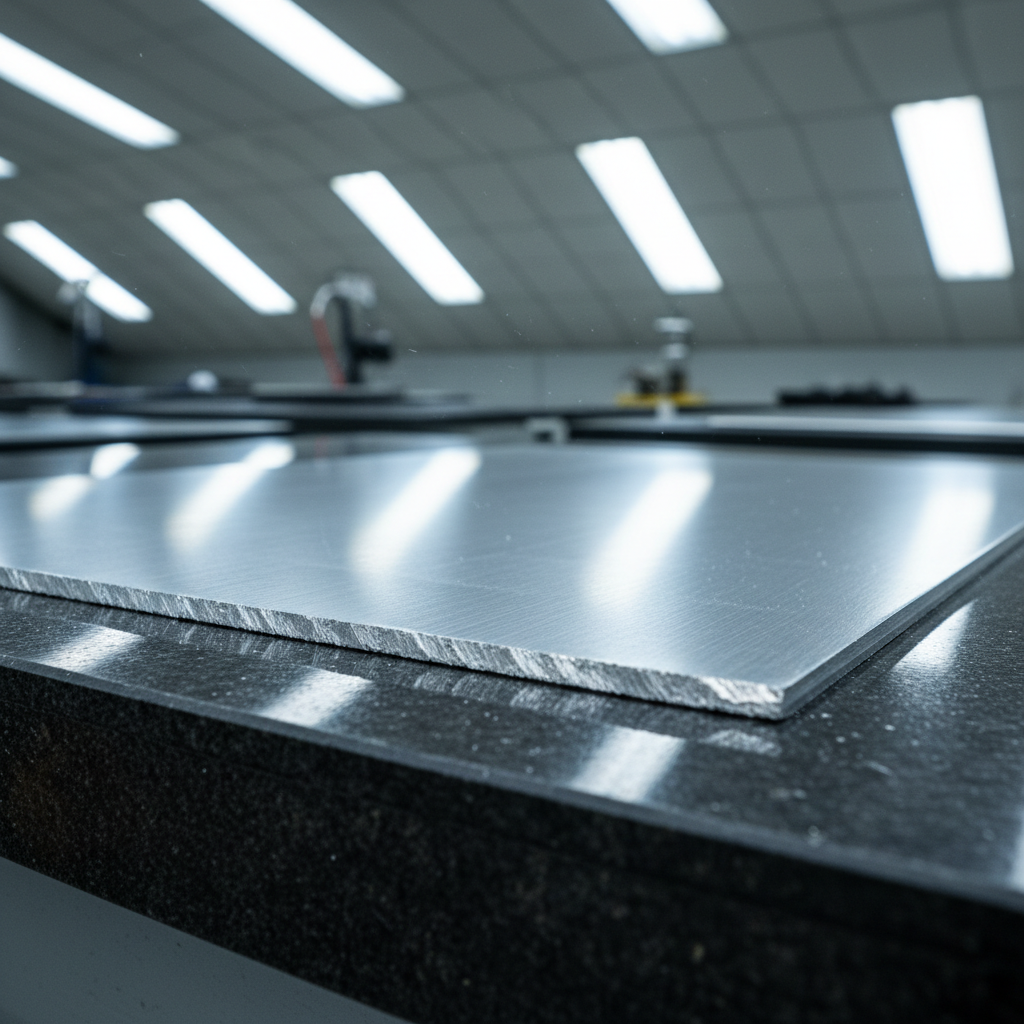
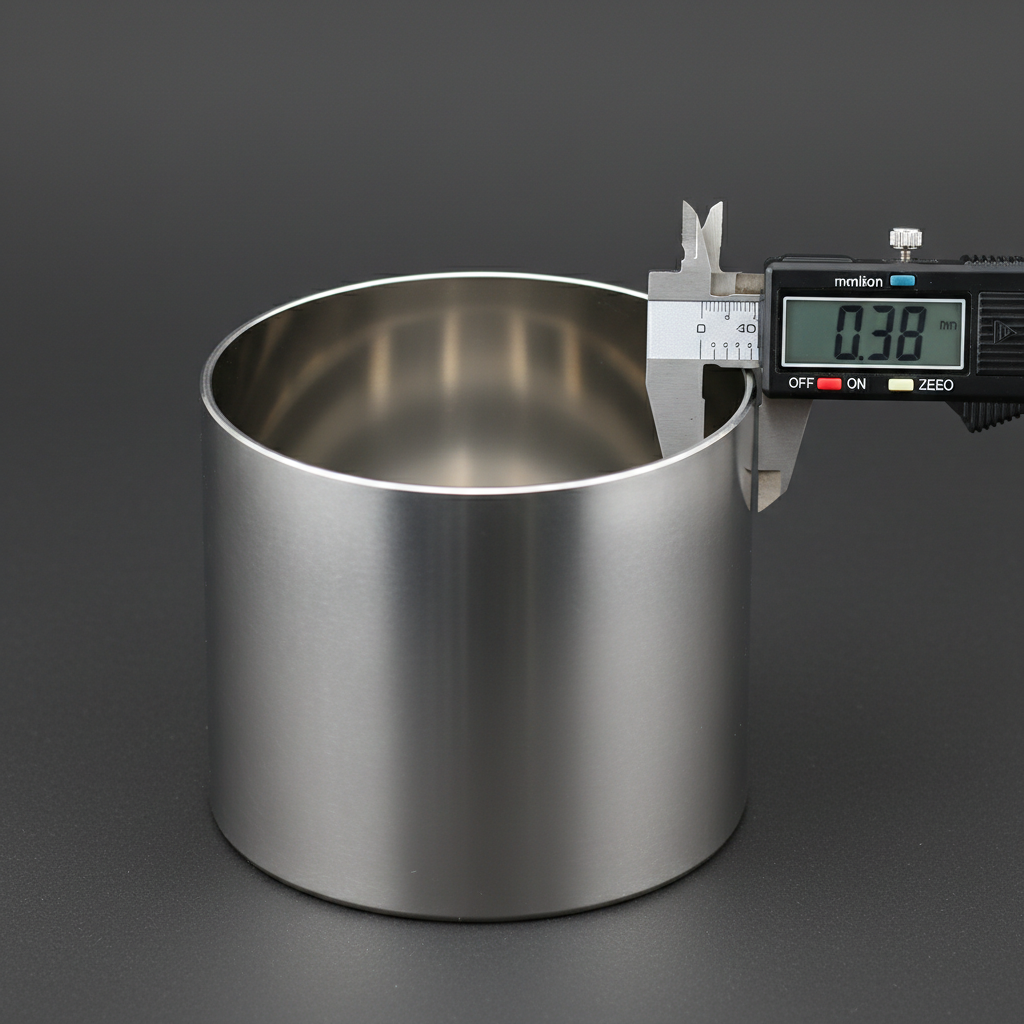
From flat stock to finished shell.
One press. Zero seams.
Drag to compare blank vs. drawn part ← →
The die decides
everything.
Every draw starts with clearance math. Punch-to-die clearance is held to 105–115% of material thickness — too tight and you shear, too loose and you wrinkle. We cut our own tooling in-house on a Mazak CNC with ±0.005 mm tolerance.
Tighter = shear risk. Looser = wrinkling. We hold ±0.005 mm.
Undersized radius tears. Oversized radius buckles flange.
Controlled via nitrogen cylinders, monitored every stroke.
Beyond DR 2.2, earing and fracture risk increases sharply.
Nitrided surface for draw-oil adhesion and wear resistance.
Three passes.
One perfect shell.
Deep drawing isn't one operation — it's a controlled sequence of diameter reductions and wall ironing. Each stage is engineered to stay within the metal's formability envelope.
First Draw
Blank drawn into first cup. Flange wrinkle suppressed by blank holder. Wall thickness drops ~2% from cold work.
The right alloy
changes everything.
Material selection drives tooling clearance, blank holder force, annealing schedule, and final wall spec. Here's our working comparison for the three alloys we run most.
Aluminum
3003-H14
Best-in-class formability. Excellent corrosion resistance. Preferred for high-volume EV applications where weight matters.
PPAP before
the first shipment.
Aerospace sub-tiers and EV Tier-1s don't schedule calls without PPAP Level 3 in hand. We build the documentation package in parallel with tooling — not after. Every dimension gets a control plan entry.
Full PPAP package includes: Part Submission Warrant, Dimensional Results, Material Certs, Process Flow, PFMEA, Control Plan, MSA, SPC initial study.
Two paths to your
first drawn part.
Deep Draw Design Guide
18-page engineering reference. Wall-thickness-to-diameter ratios, material selection flowchart, tooling clearance tables, and DFM checklist. Used by 400+ procurement engineers.
Complete form to unlock
Upload Your Part Print for DFM Review
Send us a STEP, DXF, or PDF and our senior tooling engineer will return a DFM report within 2 business days — wall thickness feasibility, recommended draw sequence, and material suggestions.
Drop your part print here
STEP · DXF · PDF — up to 50 MB
2 business day turnaround · No NDA required